

The Masochistic Masses
- Rah Boz
- Jan 28
- 4 min read
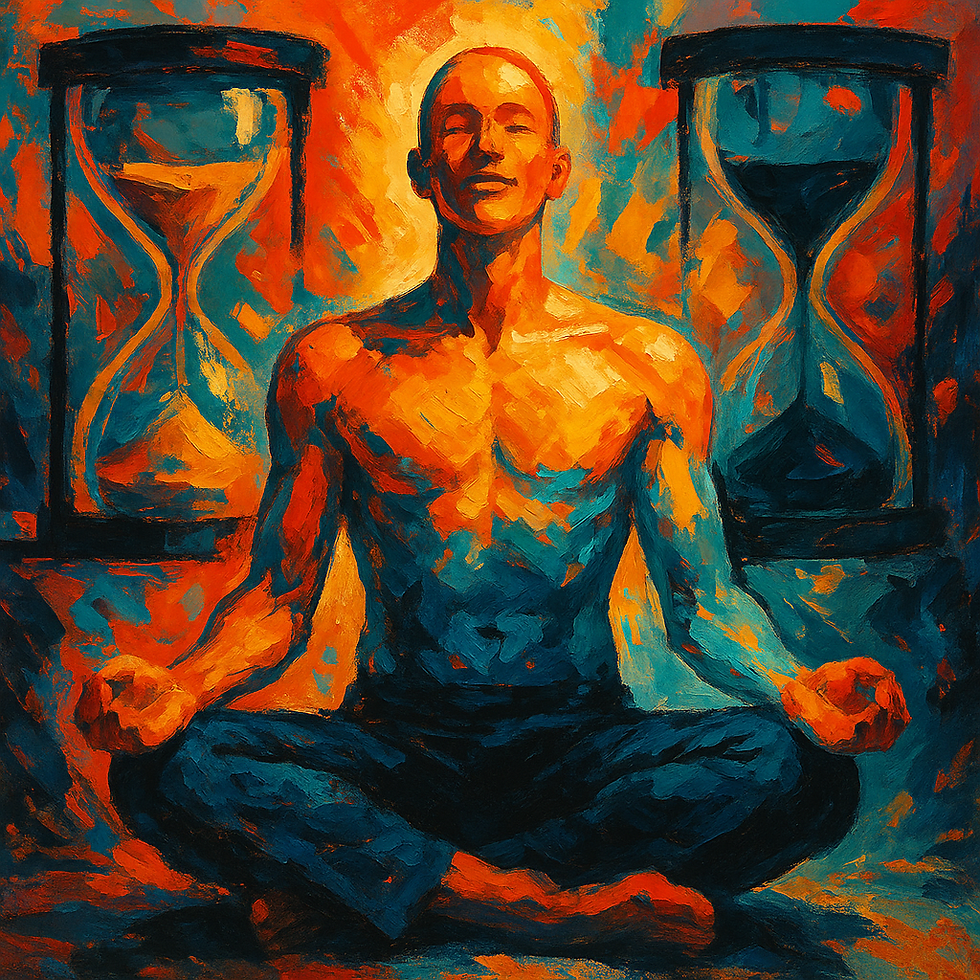
Why We Repeatedly Choose What Hurts Us

Human beings are not ignorant of what harms them. Biologically, the nervous system evolved to detect threat and seek safety. Psychologically, intuition flags danger long before logic assembles its case. Culturally, proverbs, myths, and medical warnings repeat the same lessons across centuries. And yet, at scale, societies persist in behaviors that erode health, freedom, meaning, and even survival. This is not simple stupidity. It is a paradox at the heart of mass psychology: a collective tendency to pursue what wounds us, while knowing—sometimes vividly—that it will.
This essay argues that the “masochism” of the masses is not a love of pain for its own sake, but a convergence of four forces: evolutionary mismatch, emotional regulation through self-sabotage, social conformity as a substitute for truth, and the seduction of short-term relief over long-term coherence. Together, these produce a civilization that often acts against its own biological and existential interests.
1. Evolutionary Brains in Artificial Worlds
The human nervous system evolved in environments of immediate cause and effect. Hunger meant forage now. Danger meant run now. Social exclusion meant death. In such a world, instincts were accurate guides.
Modern life, however, is a hall of mirrors. Highly processed foods trigger ancient reward circuits without providing real nourishment. Digital validation stimulates tribal belonging without real community. Debt, pollution, and chronic stress accumulate silently, their consequences delayed and abstract.
The brain is still optimized for the savannah, but it is now negotiating with algorithms, corporations, and symbolic systems. It confuses stimulation with sustenance, urgency with importance, and comfort with safety. What feels good in the moment hijacks what is good in the long arc. This mismatch does not erase intuition; it drowns it in noise.
Thus people “know” something is wrong—physically, morally, existentially—but the signal is faint compared to the roar of engineered reward.
2. Pain as a Regulator of Identity
There is a deeper layer than confusion: repetition. Humans often reenact what harms them even after consequences are clear. This reveals a psychological truth: pain can be stabilizing.
Familiar suffering is predictable. It confirms identity. A person who has learned, early on, that love comes with neglect, that work comes with burnout, or that worth comes with self-denial will unconsciously seek the same patterns at scale. Discomfort becomes homeostasis.
On a collective level, societies form identities around struggle narratives: the noble sacrifice, the grind, the crisis, the enemy. These stories give meaning, even when they corrode well-being. To abandon the pattern would require not just new policies, but new selves.
So the masses return to what hurts them, not because they crave pain, but because pain maintains coherence. It tells them who they are.
3. Conformity Over Cognition
Humans are social before they are rational. Belonging once meant survival; exile meant extinction. This ancient calculus still runs the code.
When a harmful behavior becomes normalized—overwork, toxic diets, addictive technologies, environmental destruction, ideological extremism—individual intuition is overridden by collective agreement. The question shifts from “Is this good for us?” to “Is this what we do?”
Dissent feels like danger. Alignment feels like safety, even when the aligned path leads off a cliff. The nervous system prefers shared error to solitary truth.
Thus entire populations participate in self-damaging systems while privately sensing their wrongness. The biology that once protected the tribe now protects the illusion.
4. The Tyranny of the Immediate
At the core lies temporal myopia. The body is exquisitely sensitive to now and notoriously blind to later.
Dopamine rewards anticipation, not fulfillment. Cortisol sharpens focus for short crises, not long horizons. The future self is neurologically treated as a stranger. As a result, people repeatedly choose the relief that costs them their future, the comfort that mortgages their health, the certainty that impoverishes their freedom.
This is not mere weakness. It is a structural bias of the nervous system. Without cultural, educational, and institutional scaffolding to extend time perception, instinct favors the near over the true.
5. The Myth of Rational Self-Interest
Classical economics imagined humans as utility-maximizing agents. Reality presents something stranger: beings who maximize familiarity, status, narrative, and emotional regulation, even at the expense of survival.
The “masochism” of the masses is therefore not a love of suffering, but a failure of alignment between three layers of knowing:
Biological knowing: what sustains the organism
Intuitive knowing: what feels wrong or right beneath words
Symbolic knowing: what society rewards, repeats, and legitimizes
When the third dominates, the first two are silenced. People obey systems that exhaust them, consume what sickens them, and defend structures that diminish them, all while sensing the dissonance in their bones.
Conclusion: Not Masochism, but Captivity
To call the masses masochistic is poetically accurate but clinically incomplete. The phenomenon is less a desire for pain than a captivity to misaligned incentives, inherited narratives, and neural architectures built for another epoch.
People do what harms them not because they are blind, but because their vision is fragmented across timescales, social pressures, and emotional economies. They know, but not in a way that is permitted to guide action.
Liberation, then, is not primarily informational. It is integrative. It requires reuniting instinct with environment, intuition with culture, and long-term survival with short-term reward. Until that alignment occurs, societies will continue their strange ritual: flinching at the wound even as they press on it, whispering “this is wrong” while marching in perfect, painful step.


Comments