

The Hidden Dangers of Canned and Boxed Fruit Juices and Sodas
- Rah Boz
- Jun 18, 2025
- 4 min read

Especially for Youth

Introduction
The brightly colored labels, fruity illustrations, and catchy slogans of canned and boxed juices and sodas make them seem like harmless treats. In reality, these beverages often harbor a range of harmful ingredients and health risks—especially for children and adolescents, whose developing bodies are far more sensitive to chemical additives, sugars, and metabolic disruptions. Alarmingly, even brands trusted by parents can produce both seemingly healthy and overtly harmful drinks, creating confusion and misplaced confidence in product safety.
This article explores the specific health risks associated with these beverages, the misleading tactics used by manufacturers, and what families should look out for when choosing drinks for their children.
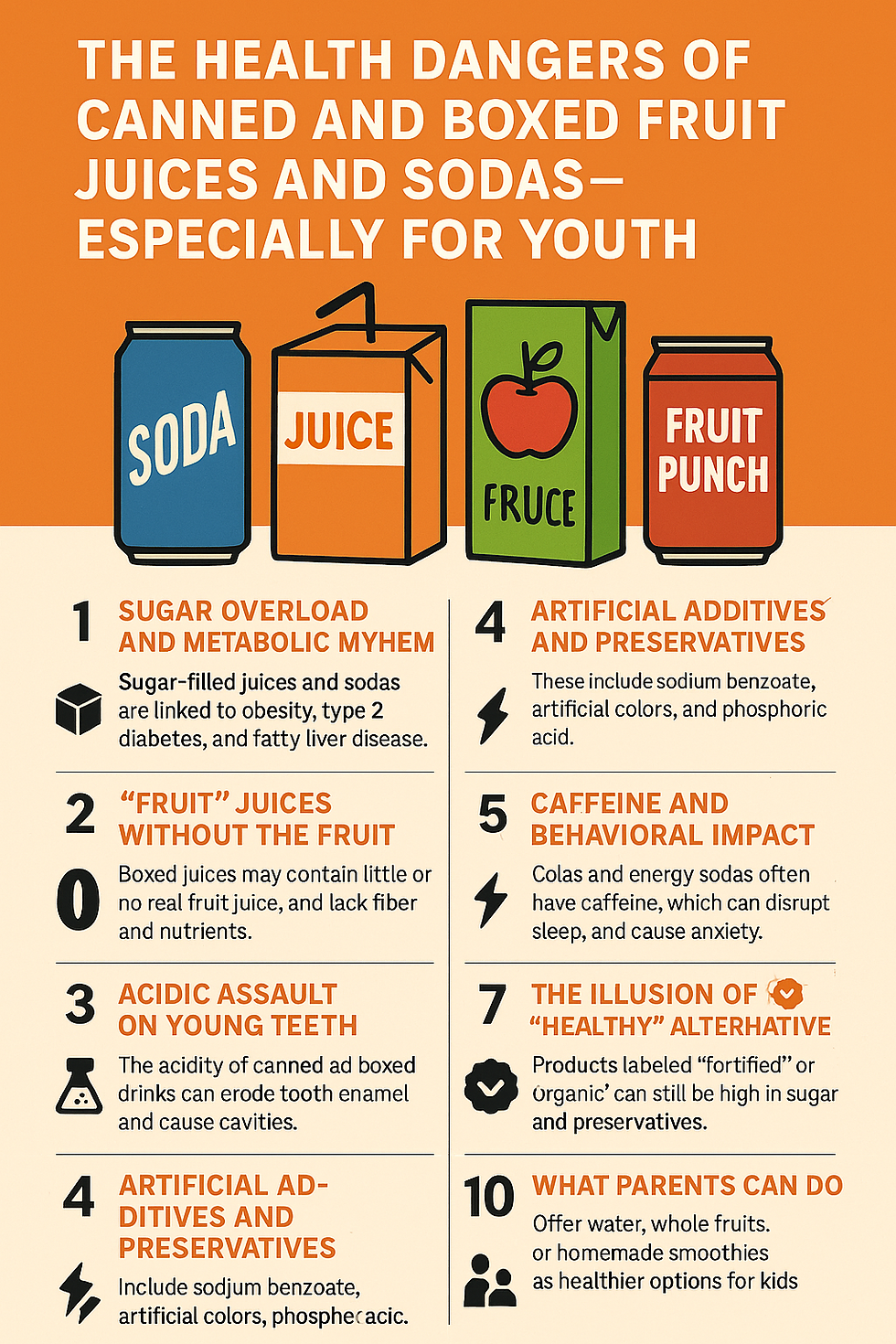
Sugar Overload and Metabolic Mayhem
Key Issue: The sugar content in canned and boxed juices and sodas is often astronomically high. A single 250ml box of fruit juice can contain the equivalent of 6–8 teaspoons of sugar, while sodas can easily top 10 teaspoons or more.
Consequences:
Obesity: Excessive sugar intake contributes significantly to weight gain, especially in sedentary children.
Type 2 Diabetes Risk: Consistently high sugar consumption has been linked to early insulin resistance and diabetes.
Fatty Liver Disease: Fructose-heavy drinks are associated with non-alcoholic fatty liver disease, even in children.
Mood Swings and Hyperactivity: Sugar spikes and crashes can influence behavior, leading to irritability, attention issues, and fatigue.
“Fruit” Juices Without the Fruit
Many boxed juices claim to be "100% juice" or "natural," but this often refers only to the juice concentrate used—which is stripped of most fiber and nutrients. Others contain as little as 5–10% real juice, with the remainder being water, sugar, and artificial flavorings.
The Deceptive Practice:
Phrases like “no added sugar” may still hide concentrated fruit sugars or syrups.
Brands often use “fruit cocktail” or “fruit drink” instead of “juice” to avoid stricter labeling requirements.
Acidic Assault on Young Teeth
Canned sodas and boxed juices are highly acidic, which can erode tooth enamel, leading to cavities and long-term dental issues.
Dental Consequences:
Enamel erosion begins within minutes of drinking.
Kids who sip slowly or frequently from juice boxes or soda cans are especially at risk.
Pediatric dentists now rank fruit juice as a leading contributor to childhood tooth decay.
Artificial Additives and Preservatives
Some of the most concerning chemicals in these drinks include:
Sodium benzoate: Can react with vitamin C to form benzene, a known carcinogen.
Artificial colors (e.g., Red 40, Yellow 5): Linked to hyperactivity and allergic reactions.
Phosphoric acid (in sodas): Associated with bone density loss in children.
These ingredients, banned or restricted in parts of Europe, are still widely used in North American beverage products.
Caffeine and Behavioral Impact
Colas and energy sodas often contain caffeine, which can cause:
Sleep disruption
Anxiety and restlessness
Dependency or withdrawal symptoms
Even small doses can be harmful to younger children, whose nervous systems are still developing.
Packaging Problems: BPA and Contaminants
Canned and boxed drinks are often lined with Bisphenol A (BPA) or related compounds, which have been shown to disrupt hormonal development and metabolism.
Risks Include:
Endocrine disruption
Developmental and reproductive concerns
Increased cancer risk over long-term exposure
Though some brands have phased out BPA, others have merely replaced it with similar—and equally concerning—alternatives.
The Two-Faced Brand Dilemma
What makes the situation worse is the inconsistency within brands. For example:
A brand may offer a "no sugar added, organic juice" and also a sugar-loaded, dye-filled “fruit punch” under the same label.
Parents may assume a brand they trust for one product ensures safety across the board—which is rarely the case.
This dual marketing strategy is intentional. It capitalizes on brand loyalty while maintaining a grip on the sugar-addicted segment of the market.
Youth Are Especially Vulnerable
Children are not just "small adults." Their bodies are still growing, their metabolism is faster, and their brain chemistry is more easily affected. This makes them especially vulnerable to:
Nutritional imbalances
Long-term metabolic disorders
Early-onset obesity and cardiovascular disease
Psychological effects from additives and sugar dependency
The Illusion of “Healthy” Alternatives
Even products labeled “fortified with vitamins,” “organic,” or “with real fruit” can be misleading. Many still contain:
High natural sugar content (especially from apple or grape juice concentrate)
No fiber
Preservatives and additives for shelf life
True healthy options retain the fiber, are low in sugar, and contain minimal processing—something few boxed or canned beverages deliver.
What Parents Can Do
Better Choices Include:
Whole fruits over juice
Water infused with fruit slices for flavor
Homemade smoothies with fiber intact
Diluted natural juices (e.g., 1 part juice to 3 parts water)
Read Labels Carefully:
Look at sugar content per serving, not per container.
Avoid drinks with artificial colors or vague fruit claims.
Choose packaging marked “BPA-free” or opt for glass bottles.
Final Thoughts
Canned and boxed fruit juices and sodas are a modern health hazard—disguised as convenient treats. They deliver sugar, chemicals, and acid with little to no nutritional benefit, especially harmful to youth. While not all products are created equal, the burden is on parents and educators to look past the branding and scrutinize what children consume.
Until manufacturers are held to stricter health standards, education and awareness are our best tools to protect the next generation from a lifetime of dietary pitfalls.


Comments